

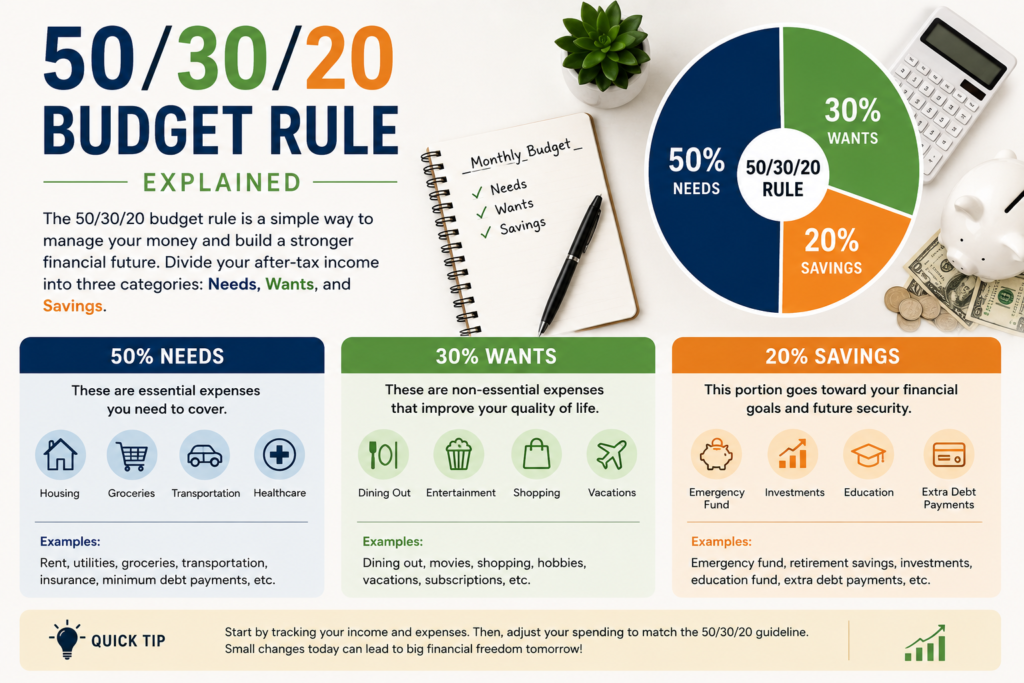
Introduction Managing personal finances can feel overwhelming, especially when you’re trying to balance bills, savings, debt payments, and everyday expenses. One of the most popular budgeting methods for beginners is the 50/30/20 budget rule. The 50/30/20 rule provides a simple framework for dividing your income into three categories: needs, wants, and savings. Rather than tracking…
Introduction
Managing personal finances can feel overwhelming, especially when you’re trying to balance bills, savings, debt payments, and everyday expenses. One of the most popular budgeting methods for beginners is the 50/30/20 budget rule.
The 50/30/20 rule provides a simple framework for dividing your income into three categories: needs, wants, and savings. Rather than tracking every dollar spent, this approach helps create a balanced financial plan that supports both current lifestyle needs and future financial goals.
Whether you’re just starting your financial journey or looking for an easier way to manage your money, understanding the 50/30/20 rule can help you develop healthier financial habits and build long-term financial stability.
What Is the 50/30/20 Budget Rule?
The 50/30/20 budget rule is a budgeting method that divides your after-tax income into three categories:
50% for Needs
Essential expenses required for daily living.
30% for Wants
Lifestyle and discretionary spending.
20% for Savings and Debt Repayment
Financial goals, emergency savings, and additional debt payments.
The goal is to create a healthy balance between living expenses, enjoyment, and long-term financial security.
Understanding the 50% Needs Category
Needs are essential expenses that you must pay to maintain your basic standard of living.
Examples include:
- Rent or mortgage
- Utilities
- Groceries
- Health insurance
- Transportation
- Minimum debt payments
- Essential medical expenses
Example
If your monthly after-tax income is $4,000:
50% = $2,000
This amount would be allocated toward essential expenses.
Understanding the 30% Wants Category
Wants are non-essential purchases that improve your lifestyle but are not required for basic living.
Examples include:
- Dining out
- Entertainment
- Streaming subscriptions
- Vacations
- Hobbies
- Gym memberships
- Shopping
Example
Monthly income: $4,000
30% = $1,200
This amount can be used for discretionary spending.
Understanding the 20% Savings Category
The final portion is dedicated to improving your financial future.
Examples include:
- Emergency fund contributions
- Retirement savings
- Investment accounts
- Extra debt payments
- Long-term savings goals
Example
Monthly income: $4,000
20% = $800
This amount can be directed toward savings and financial goals.
Example of a 50/30/20 Budget
Monthly Income: $4,000
Needs (50%)
- Rent: $1,200
- Utilities: $200
- Groceries: $350
- Transportation: $150
- Insurance: $100
Total: $2,000
Wants (30%)
- Dining Out: $300
- Entertainment: $250
- Shopping: $350
- Hobbies: $300
Total: $1,200
Savings (20%)
- Emergency Fund: $300
- Retirement Savings: $300
- Investment Account: $200
Total: $800
Benefits of the 50/30/20 Rule
Easy to Understand
The rule uses simple percentages, making budgeting less complicated.
Flexible
You can adjust spending within each category based on your needs.
Encourages Saving
The method ensures that savings remain a priority.
Promotes Financial Balance
It allows room for enjoyment while supporting long-term goals.
Who Should Use the 50/30/20 Budget Rule?
This budgeting method works well for:
- Beginners
- Young professionals
- Families
- Individuals with stable income
- People looking for a simple budgeting system
It may be particularly helpful for those who find detailed budgeting difficult to maintain.
Common Challenges
High Housing Costs
In some areas, housing expenses may exceed the recommended 50%.
Variable Income
Freelancers and self-employed individuals may need additional flexibility.
Significant Debt
Those with large debt balances may choose to allocate more than 20% toward debt repayment.
Rising Living Costs
Inflation and changing expenses may require adjustments to budget percentages.
Tips for Making the Rule Work
Track Spending Regularly
Review transactions weekly or monthly.
Automate Savings
Set up automatic transfers to savings accounts.
Review Monthly
Adjust your budget as expenses and income change.
Focus on Progress
Budgeting is a long-term habit rather than a short-term solution.
Alternatives to the 50/30/20 Rule
Zero-Based Budgeting
Every dollar receives a specific purpose.
Envelope Budgeting
Cash is allocated to spending categories.
Pay Yourself First
Savings contributions are prioritized before spending.
Each method has advantages depending on personal preferences and financial goals.
Common Budgeting Mistakes
- Ignoring small purchases
- Not reviewing the budget regularly
- Setting unrealistic spending limits
- Forgetting irregular expenses
- Neglecting emergency savings
Avoiding these mistakes can improve budgeting success over time.
Frequently Asked Questions
Is the 50/30/20 rule suitable for everyone?
The rule provides a helpful framework, but individuals may need adjustments based on income, location, and financial goals.
Should debt payments be included in the 20% category?
Minimum debt payments are generally considered needs, while additional debt repayment may be included in the 20% savings category.
What if my housing costs exceed 50%?
Many people adjust the percentages to reflect local living costs while still prioritizing savings.
Can I use this method with irregular income?
Yes. Individuals with variable income may use average monthly earnings to create a flexible version of the budget.
Is the 50/30/20 rule good for beginners?
Yes. Its simplicity makes it one of the most beginner-friendly budgeting systems available.
Conclusion
The 50/30/20 budget rule offers a practical and easy-to-follow approach to managing money. By allocating income toward essential expenses, lifestyle spending, and savings, individuals can create a balanced financial plan that supports both present needs and future goals.
While no budgeting system is perfect for everyone, the 50/30/20 method provides a strong starting point for developing healthy financial habits. The key is consistency, regular review, and adapting the framework to fit your unique financial situation.
With patience and discipline, this simple budgeting strategy can help improve financial confidence and support long-term financial success.
Sources
- Consumer Financial Protection Bureau (CFPB)
- Federal Trade Commission (FTC)
- FDIC Consumer Education Resources
- Public financial literacy and budgeting resources
About the Author
Elizabeth Toohey
Elizabeth Toohey is a personal finance researcher and content writer specializing in budgeting, savings strategies, consumer banking, and financial literacy. She focuses on creating educational content that helps readers better understand everyday money management, financial planning, and responsible borrowing practices.
Comments
Share a useful question, experience or perspective. Keep the discussion respectful and relevant to the article.