

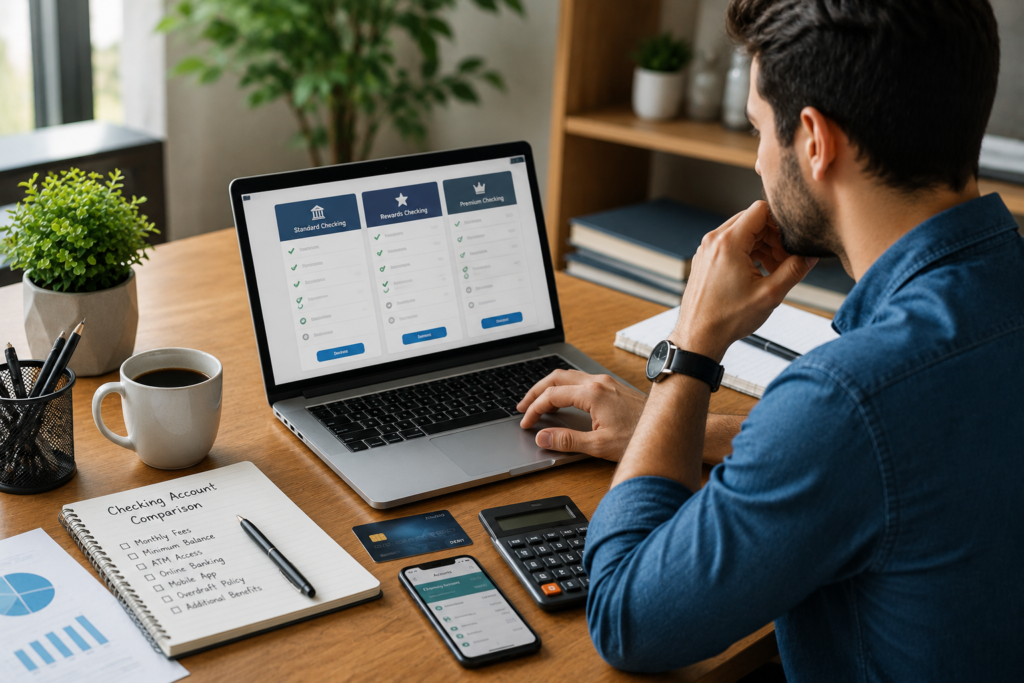
A checking account is one of the most important financial tools you’ll use. Whether you’re receiving your paycheck, paying bills, shopping online, or withdrawing cash from an ATM, the right checking account can make managing your money easier and more affordable. With so many options available—from traditional banks to online-only financial institutions—choosing the right account…
A checking account is one of the most important financial tools you’ll use. Whether you’re receiving your paycheck, paying bills, shopping online, or withdrawing cash from an ATM, the right checking account can make managing your money easier and more affordable.
With so many options available—from traditional banks to online-only financial institutions—choosing the right account can feel overwhelming. The best checking account isn’t necessarily the one with the most features; it’s the one that matches your spending habits, banking preferences, and financial goals.
This guide explains what to look for when comparing checking accounts and how to choose one that fits your needs.
What Is a Checking Account?
A checking account is a bank account designed for everyday financial transactions.
You can use it to:
- Deposit your paycheck
- Pay bills
- Make purchases with a debit card
- Withdraw cash from ATMs
- Transfer money electronically
- Receive direct deposits
Unlike many savings accounts, checking accounts are intended for frequent use.
Identify How You Bank
Before comparing accounts, think about how you manage your money.
Ask yourself:
- Do you prefer online or in-person banking?
- How often do you use ATMs?
- Do you receive direct deposits?
- Do you write checks?
- Do you travel frequently?
- Do you need a joint account?
Your answers will help narrow your options.
Compare Monthly Fees
Some checking accounts charge monthly maintenance fees, while others are free.
Look for accounts that:
- Have no monthly fee
- Waive fees with direct deposit or minimum balances
- Offer free online banking
- Include free debit cards
Avoid paying for services you don’t need.
Check Minimum Balance Requirements
Some banks require you to keep a minimum balance.
If your balance falls below the required amount, you may face monthly charges.
Choose an account that matches your normal banking habits.
Review ATM Access
Convenient ATM access is important.
Consider:
- Size of the ATM network
- Out-of-network ATM fees
- ATM fee reimbursements
- International ATM availability if you travel
More ATM options can save both time and money.
Look for Digital Banking Features
Modern checking accounts often include helpful digital tools.
Popular features include:
- Mobile banking apps
- Mobile check deposit
- Real-time transaction alerts
- Bill payment services
- Card lock and unlock features
- Digital wallet compatibility
These tools make managing your finances more convenient.
Understand Overdraft Options
Overdrafts occur when you spend more money than is available in your account.
Some banks offer:
- Overdraft protection
- Linked savings transfers
- Grace periods
- Low-fee overdraft options
Understanding these policies can help you avoid unnecessary charges.
Consider Customer Support
Reliable customer service can make a big difference when problems arise.
Check whether the bank offers:
- Phone support
- Live chat
- Email assistance
- Branch locations
- Extended service hours
Good support provides peace of mind.
Compare Additional Benefits
Some checking accounts offer extra features, such as:
- Cashback on debit card purchases
- Early direct deposit
- Budgeting tools
- Free checks
- Identity theft protection
- Discounts on other banking products
These benefits may add value depending on your needs.
Don’t Forget Account Security
Security should always be a priority.
Choose a bank that offers:
- Multi-factor authentication
- Fraud monitoring
- Account alerts
- Secure mobile apps
- Encrypted online banking
These features help protect your money and personal information.
Common Mistakes to Avoid
Many people choose checking accounts without comparing their options.
Avoid these common mistakes:
- Ignoring monthly maintenance fees
- Not reviewing ATM charges
- Choosing an account with unrealistic minimum balance requirements
- Overlooking overdraft policies
- Failing to use digital security features
- Opening an account without comparing multiple banks
Taking time to compare accounts can save money over the long term.
Who Should Consider an Online Checking Account?
Online checking accounts may be a good choice for people who:
- Prefer digital banking
- Rarely visit bank branches
- Want lower fees
- Are comfortable using mobile apps
- Receive direct deposits electronically
However, if you frequently deposit cash or prefer face-to-face service, a traditional bank may better suit your needs.
Final Thoughts
Choosing the right checking account is about finding a balance between convenience, cost, and the features that matter most to you. Consider how you bank every day, compare fees and services carefully, and select an account that supports your financial habits instead of creating unnecessary expenses.
The right checking account can simplify money management, improve your banking experience, and help you stay in control of your finances.
Key Takeaways
- Choose a checking account based on your banking habits.
- Compare monthly fees, ATM access, and minimum balance requirements.
- Look for strong digital banking and security features.
- Review overdraft policies before opening an account.
- Compare multiple banks before making a decision.
Frequently Asked Questions
What is a checking account used for?
A checking account is designed for everyday banking activities such as receiving deposits, paying bills, making purchases, and withdrawing cash.
Are all checking accounts free?
No. Some accounts charge monthly maintenance fees, although many banks offer fee-free options or waive fees if certain requirements are met.
Can I open more than one checking account?
Yes. Many people maintain multiple checking accounts for budgeting, household expenses, or different financial goals.
Is online banking safe?
Most banks use encryption, fraud monitoring, and multi-factor authentication to help protect customer accounts. Using strong passwords and enabling security features can further improve account safety.
What should I compare before opening a checking account?
Compare monthly fees, ATM access, minimum balance requirements, overdraft policies, digital banking tools, customer service, and security features.
Comments
Share a useful question, experience or perspective. Keep the discussion respectful and relevant to the article.