

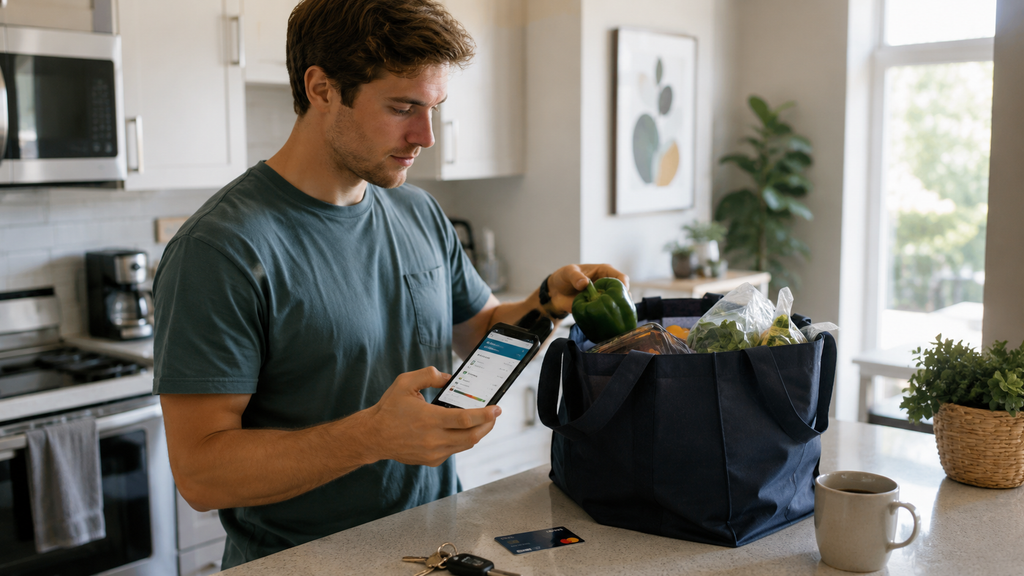
What Is a Checking Account? A checking account is a bank or credit union account designed primarily for: everyday money management. It’s where many people keep the money they regularly use for: Receiving a paycheck Paying bills Buying groceries Using a debit card Withdrawing cash Sending money and: Making electronic payments. Unlike a savings account,…
What Is a Checking Account?
A checking account is a bank or credit union account designed primarily for:
everyday money management.
It’s where many people keep the money they regularly use for:
Receiving a paycheck
Paying bills
Buying groceries
Using a debit card
Withdrawing cash
Sending money
and:
Making electronic payments.
Unlike a savings account, which is generally designed to hold money you’re saving, a checking account is built around:
frequent transactions.
For many people, it becomes the financial hub connecting:
Income → Bills → Spending → Savings
Understanding how checking accounts work can help you manage your money, avoid unnecessary fees and choose an account that fits your everyday needs.
How Does a Checking Account Work?
The basic idea is simple.
You:
deposit money into the account.
That creates an:
available balance
you can use for eligible transactions.
You can then access the money using methods such as:
Debit card purchases
ATM withdrawals
Checks
Online bill payments
ACH transfers
and:
Bank-to-bank transfers.
Your bank keeps a record of money:
coming in
and:
going out.
Simple Checking Account Example
Suppose you begin the month with:
$1,500.
Your employer deposits:
$2,500.
Your balance becomes:
$4,000.
Then you spend:
Rent: $1,500
Groceries: $400
Utilities: $250
Transportation: $300
Other spending: $350
Total spending:
$2,800.
Remaining:
$1,200.
That’s the basic function of a checking account:
receive money,
hold money,
and:
make everyday payments.
What Can You Use a Checking Account For?
A checking account can serve several purposes.
1. Receiving Your Paycheck
Many employers offer:
direct deposit.
Instead of receiving a physical paycheck, your wages are electronically deposited into your checking account.
This can make your income:
easier to access and manage.
2. Paying Bills
You can use checking-account funds to pay:
Rent
Mortgage
Electricity
Internet
Phone
Insurance
Credit cards
and:
Other recurring expenses.
Many payments can be automated.
3. Debit Card Purchases
Most checking accounts can be connected to:
a debit card.
When you use the debit card, money generally comes from:
your checking account
rather than creating credit-card debt.
4. ATM Withdrawals
Your debit or ATM card can usually be used to withdraw:
cash.
However, ATM fees can depend on:
Your bank
ATM network
and:
Which ATM you use.
5. Writing Checks
Although checks are less common for many everyday transactions, some checking accounts still allow you to:
write paper checks.
A check instructs your financial institution to pay:
a specified amount
from your account.
6. Sending Electronic Transfers
Checking accounts can generally be used for:
ACH transfers
Bank transfers
Automatic payments
and:
Other electronic transactions.
This makes checking accounts particularly useful for:
managing recurring financial obligations.
Checking Account vs. Savings Account
One of the most common questions is:
What’s the difference between checking and savings?
Here’s the simple version:
Checking = Spending
Savings = Saving
But there is more to it.
| Feature | Checking Account | Savings Account |
|---|---|---|
| Primary purpose | Everyday spending | Saving money |
| Debit card | Common | Varies |
| Check writing | Often available | Usually limited/not available |
| Bill payments | Common | Less commonly used |
| ATM access | Common | Often available |
| Interest | Often low or none | Usually pays interest |
| Frequent transactions | Designed for them | Primarily designed for saving |
| Direct deposit | Common | May be available |
Many people benefit from having:
both.
Example: Using Checking and Savings Together
Suppose you receive:
$4,000 per month.
Your paycheck enters:
Checking
Then you automatically transfer:
$500
to:
Savings.
Your checking account handles:
Rent
Food
Transportation
Bills
and:
Everyday purchases.
Your savings account holds money for:
Emergency fund
Vacation
Future home purchase
or:
Other financial goals.
This creates a simple system:
Income → Checking → Expenses + Savings
What Is a Debit Card?
A debit card is a payment card typically connected directly to:
your checking account.
Suppose your checking account has:
$2,000.
You purchase groceries for:
$150.
Once the transaction settles, your account balance is reduced accordingly.
Unlike a credit card, you’re generally spending:
money already in your bank account.
Debit Card vs. Credit Card
These cards may look similar, but they work differently.
| Debit Card | Credit Card |
|---|---|
| Uses funds from your bank account | Uses a line of credit |
| Usually linked to checking | Separate credit account |
| Doesn’t normally create borrowing when used within your balance | Creates a balance you owe |
| May allow ATM cash withdrawals | Cash advances may be available |
| Spending reduces deposit balance | Purchases increase credit balance owed |
A debit card isn’t:
a checking account itself.
It is simply:
one way to access the account.
What Is Direct Deposit?
Direct deposit allows money to be sent electronically:
directly into your bank account.
It is commonly used for:
Paychecks
Government payments
Pensions
and:
Other recurring payments.
Instead of depositing a paper check, the funds arrive:
electronically.
Some banks may also offer account benefits when customers receive:
qualifying direct deposits.
Always check the specific bank’s requirements.
What Is an ACH Transfer?
ACH stands for:
Automated Clearing House.
ACH is an electronic payment network used for transactions such as:
Payroll direct deposits
Bill payments
and:
Bank transfers.
For example, you might connect your checking account to your:
utility provider.
Each month, the company electronically collects:
your bill payment.
What Is a Bank Transfer?
A bank transfer moves money:
from one account to another.
You might transfer money:
Checking → Savings
or:
Bank A → Bank B.
Transfer speed depends on:
Transfer type
Bank
Timing
and:
Processing rules.
Don’t assume every electronic transfer is:
instant.
What Is a Wire Transfer?
A wire transfer is another method for:
electronically moving money.
Wires are often used for:
Large transactions
Time-sensitive payments
and:
Certain domestic or international transfers.
They may also involve:
fees.
Always verify the recipient information before sending a wire because:
recovering money sent to the wrong recipient can be difficult.
Current Balance vs. Available Balance
This is an important distinction.
Your:
Current Balance
may reflect transactions that have already posted to your account.
Your:
Available Balance
generally reflects the amount currently available for spending, taking into account certain holds or pending activity according to the bank’s system.
These figures can sometimes:
differ.
Example of a Pending Transaction
Suppose your account shows:
Current balance: $1,000
but you recently made a:
$200 debit card purchase
that hasn’t fully posted yet.
Your available funds may reflect that pending transaction differently.
If you spend based only on:
an outdated or incomplete balance,
you could accidentally:
overdraw the account.
The CFPB warns that deposits, withdrawals and other transactions don’t always update balances immediately or in the order consumers expect.
What Is an Overdraft?
An overdraft happens when:
you don’t have enough money in your account to cover a transaction,
but your financial institution:
pays the transaction anyway.
The CFPB uses this definition and notes that overdrafts can occur through checks, debit purchases, ATM transactions, automatic bill payments and electronic withdrawals.
Checking Account Overdraft Example
Suppose your available balance is:
$100.
You make a:
$125 payment.
You’re:
$25 short.
Depending on your bank, transaction type and overdraft arrangements, the transaction might:
Be declined
or:
Be paid and leave the account negative.
Fees may apply depending on:
the circumstances and account terms.
Do Banks Charge Overdraft Fees?
Some do.
Some banks have:
reduced or eliminated certain overdraft fees,
while others continue to charge them under particular circumstances.
The CFPB notes that for ATM withdrawals and one-time debit-card transactions, a bank generally cannot charge an overdraft fee unless the consumer has affirmatively opted into that overdraft service. Different rules can apply to checks and recurring electronic payments.
That’s why you should understand:
your bank’s specific overdraft policy.
How to Reduce the Risk of Overdrafts
Helpful practices include:
Monitoring your available balance
Setting low-balance alerts
Knowing when automatic bills are scheduled
Keeping a small buffer in checking
and:
Understanding when deposited money becomes available.
The CFPB also notes that consumers may be able to link checking to a savings account or qualifying credit line as an alternative form of overdraft protection, although fees or interest can still apply.
What Are Checking Account Fees?
Not every checking account is:
free.
Possible charges can include:
Monthly maintenance fees
ATM fees
Overdraft fees
Wire transfer fees
Check-ordering fees
Stop-payment fees
and:
Other service charges.
Fees vary significantly by institution and account.
What Does “Free Checking” Mean?
A bank may advertise:
Free Checking.
According to the CFPB, if an account is described as “free” or “no cost,” it cannot have monthly service fees, fees for exceeding a specified number of transactions, deposit/withdrawal/transfer fees, or a fee for failing to maintain a minimum balance.
However, a free account can still have certain other charges, including qualifying:
ATM fees
Overdraft fees
Bounced-check fees
Stop-payment fees
or:
Check-printing fees.
So:
Free checking doesn’t necessarily mean every possible banking service is free.
Monthly Maintenance Fees
Some banks charge a:
monthly account fee.
For example:
$10 per month.
That’s:
$120 per year.
The bank might waive the fee if you meet certain conditions, such as:
Qualifying direct deposits
Minimum balances
or:
Other relationship requirements.
Terms vary by account.
Minimum Balance Requirements
Some checking accounts require you to maintain:
a certain balance
to avoid a monthly fee or receive particular account benefits.
For example, an account might require:
$1,500
to qualify for:
a fee waiver.
Don’t choose an account based only on the advertised fee.
Ask:
Can I realistically meet the waiver requirements every month?
What Is an Interest-Bearing Checking Account?
Some checking accounts pay:
interest.
These are sometimes called:
interest checking accounts.
The amount earned can depend on:
Account balance
Interest rate
APY
and:
Account requirements.
However, checking accounts aren’t generally where consumers seek:
the highest savings yield.
If you’re keeping money for:
long-term savings,
compare the checking account with:
High-yield savings accounts
Money market accounts
and:
Other appropriate savings products.
What Is APY?
APY stands for:
Annual Percentage Yield.
It represents the amount an interest-bearing deposit account can earn over a year based on:
its interest rate and compounding.
APY helps consumers compare:
interest-paying accounts.
If a checking account pays interest, compare:
APY
and:
Fees
rather than looking at:
interest alone.
Are Checking Accounts Safe?
For eligible accounts held at:
FDIC-insured banks,
deposit insurance can protect depositors if:
the insured bank fails,
subject to applicable coverage rules and limits.
Similarly, qualifying accounts at federally insured credit unions can receive:
NCUA share insurance.
But you should verify:
the institution’s insurance status
rather than assuming every financial app is itself:
a bank.
Bank vs. Fintech App
This distinction has become increasingly important.
A financial app may offer:
banking-like services
without itself being:
an FDIC-insured bank.
It may instead work with:
one or more partner banks.
Before depositing substantial money, identify:
Which institution actually holds the deposit
and:
How deposit insurance applies.
Don’t rely solely on:
an app’s branding.
How Much Money Should You Keep in Checking?
There isn’t one perfect amount.
A practical approach is keeping enough to cover:
upcoming expenses
plus:
a reasonable buffer.
For example:
One month of expected bills: $3,000
Checking buffer: $500
Potential checking target:
$3,500
Additional savings could potentially be held in:
an interest-bearing savings account.
Your appropriate amount depends on:
Income timing
Expenses
Savings
Bank requirements
and:
Personal comfort level.
Why Not Keep All Your Money in Checking?
You can keep substantial cash in checking, but it may not always be:
financially efficient.
Suppose your checking account pays:
little or no interest,
while an appropriate savings account pays:
a higher yield.
Money that you don’t need for everyday spending may have:
better earning potential elsewhere.
A simple system can be:
Checking = Bills and Spending
Savings = Emergency Fund and Goals
Investments = Long-Term Goals
depending on your financial circumstances and risk tolerance.
How Do You Open a Checking Account?
You can typically open one:
Online
or:
At a branch.
The CFPB recommends gathering the necessary information in advance and reviewing account choices and terms before opening a bank or credit-union account.
Requirements vary by institution.
What Information Might a Bank Request?
Depending on the institution and applicable identification requirements, you may need information such as:
Full legal name
Date of birth
Address
Taxpayer identification information
and:
Government-issued identification.
The bank may also ask for:
an opening deposit.
Requirements vary.
Can You Open a Checking Account Online?
Many financial institutions allow customers to:
apply online.
You may be able to:
Verify your identity
Fund the account
Set up online banking
and:
Request a debit card
without visiting a physical branch.
If physical branches matter to you, consider that when choosing between:
online and traditional banks.
Types of Checking Accounts
Checking accounts aren’t all identical.
Common variations include:
Standard Checking
Designed for ordinary everyday banking.
Free Checking
No monthly maintenance charge, although certain other fees can still apply.
Interest Checking
Pays interest on qualifying balances.
Student Checking
May offer features designed for:
younger customers or students.
Senior Checking
Some institutions offer accounts with features designed for:
older customers.
Second-Chance Checking
Designed for people who may have difficulty qualifying for:
traditional checking accounts.
Low-Risk Checking
The CFPB describes low-risk accounts as accounts designed to prevent customers from spending more than they have. Such accounts may decline transactions instead of allowing overdrafts, though they can have other limitations.
Joint Checking Accounts
A joint checking account has:
more than one account owner.
Common examples include:
Married couples
Partners
Parents and children
or:
Family members managing shared expenses.
Joint accounts can make shared expenses:
easier to manage.
But account owners should understand:
access and ownership rights
before opening one.
Checking Accounts for Couples
Couples sometimes choose:
one joint checking account.
Others use:
two individual accounts + one joint account.
For example:
Person A’s checking
Person B’s checking
and:
Joint household checking.
The joint account can handle:
Mortgage
Utilities
Groceries
and:
Other shared expenses.
There is no universal best setup.
Checking Accounts for Students
A student’s first checking account can be an important introduction to:
personal money management.
Students should prioritize:
Low or no monthly fees
Easy ATM access
Mobile banking
Balance alerts
Low overdraft risk
and:
Simple account requirements.
A complicated rewards program is less valuable if the account charges:
avoidable monthly fees.
Checking Accounts for Teenagers
Minors may need:
a parent or guardian
to open or jointly own an account, depending on the financial institution and applicable rules.
Teen-focused accounts can help teach:
Budgeting
Debit-card use
Balance monitoring
and:
Responsible spending.
Parents should review:
overdraft and transaction settings
carefully.
Checking Account vs. Prepaid Debit Card
A prepaid debit card and checking account aren’t:
automatically the same.
A prepaid card generally allows you to:
load money onto a card
and spend from that balance.
A checking account provides:
a deposit account relationship
with banking features that may include:
Checks
ACH payments
Direct deposit
Bank transfers
and:
Other services.
Compare:
fees and protections
before choosing.
Checking Account vs. Money Market Account
A checking account is primarily designed for:
transactions.
A money market deposit account is generally designed more around:
holding savings while earning interest,
although some can offer transaction features.
For everyday bills and spending:
checking
is usually the more natural fit.
For savings:
compare the available yield and access features.
Does Opening a Checking Account Affect Your Credit Score?
Opening an ordinary deposit account is different from:
applying for a loan or credit card.
However, financial institutions may use various:
identity, banking-history or account-screening systems
when evaluating applications.
Ask the institution if you’re concerned about:
how the application will be reviewed.
What Happens If Your Checking Account Goes Negative?
If transactions exceed the available money in your account, you can end up with:
a negative balance.
Depending on the transaction and bank policies:
A payment may be declined
The bank may pay it
Fees may apply
and:
You will need to restore the account balance.
Don’t ignore:
a negative checking balance.
Resolve it as quickly as possible.
How to Manage a Checking Account Properly
A good checking-account routine doesn’t need to be complicated.
Monitor Your Balance
Check it regularly.
Use Balance Alerts
Set notifications when your balance falls below:
a chosen amount.
Know Your Automatic Payments
Track when:
Rent
Subscriptions
Insurance
and:
Utilities
are scheduled.
Keep a Buffer
Avoid routinely spending down to:
$0.
Review Statements
Look for:
Unknown charges
Duplicate transactions
and:
Unexpected fees.
Move Excess Cash to Savings
Don’t let long-term savings sit unnecessarily in:
a non-interest-bearing account.
What Should You Look for in a Checking Account?
When comparing accounts, consider:
| Feature | What to Check |
|---|---|
| Monthly fee | Is there one? |
| Fee waiver | Can you realistically qualify? |
| Minimum balance | Is one required? |
| ATM network | Are convenient ATMs available? |
| ATM fees | What happens out of network? |
| Overdraft policy | How are insufficient funds handled? |
| Direct deposit | Is it supported? |
| Mobile app | Does it provide the features you need? |
| Bill pay | Is online bill payment available? |
| Branches | Do you need physical locations? |
| Interest/APY | Does checking earn interest? |
| Deposit insurance | Is the institution appropriately insured? |
| Customer support | How can you get help? |
Common Checking Account Mistakes
Mistake 1: Ignoring Fees
A $12 monthly fee equals:
$144 per year.
Mistake 2: Spending Based Only on the Current Balance
Pending transactions can affect:
available funds.
Mistake 3: Forgetting Automatic Payments
A forgotten subscription can contribute to:
an overdraft.
Mistake 4: Keeping Too Little Buffer
Running your checking account close to:
zero
increases the chance of payment problems.
Mistake 5: Keeping Every Dollar in Checking
Money intended for long-term savings may earn:
little or no interest.
Mistake 6: Ignoring Statements
Regular reviews can help identify:
suspicious transactions.
Mistake 7: Assuming “Free” Means Every Service Is Free
The CFPB notes that a free checking account can still have certain charges, including ATM, overdraft, stop-payment and check-printing fees.
Frequently Asked Questions
What is a checking account in simple terms?
A checking account is a bank or credit-union deposit account designed primarily for everyday transactions such as receiving income, paying bills, making debit-card purchases and withdrawing cash.
What is the main purpose of a checking account?
Its main purpose is:
managing money you regularly receive and spend.
Is a checking account the same as a debit card?
No. The checking account holds your money. A debit card is one method for accessing money in the account.
Does a checking account earn interest?
Some do, but many standard checking accounts pay little or no interest. Compare the account’s APY, fees and requirements.
How much money should I keep in checking?
There is no universal amount. Consider keeping enough for upcoming expenses plus a reasonable buffer, while moving money intended for longer-term goals into appropriate savings or investment accounts.
Can I have more than one checking account?
Yes. Some people use separate accounts for personal spending, household expenses or business purposes.
Can a checking account go negative?
Yes, depending on the transaction and the institution’s overdraft practices. A bank may decline a transaction or pay it and create a negative balance.
Can my bank charge an overdraft fee for a debit-card purchase?
For ATM and one-time debit-card transactions, federal rules generally prohibit a financial institution from charging an overdraft fee for paying the transaction unless the consumer has affirmatively opted into the institution’s overdraft service.
What is the difference between checking and savings?
Checking is designed primarily for:
transactions and spending.
Savings is designed primarily for:
holding money and earning interest.
Is my money protected if my bank fails?
Eligible deposits at FDIC-insured banks are protected according to federal deposit-insurance rules and limits. Consumers should verify that the institution holding their deposits is actually insured.
Key Takeaways
A checking account is one of the most useful tools for:
everyday financial management.
It allows you to:
Receive income
Pay bills
Use a debit card
Withdraw cash
Make electronic transfers
and:
Manage routine spending.
But choosing the right account involves more than:
finding the nearest bank.
Compare:
Monthly fees
Minimum-balance requirements
ATM access
Overdraft policies
Mobile banking
Interest
and:
Deposit protection.
The CFPB recommends understanding your account options and terms when choosing and using a bank or credit-union account.
A simple approach for many households is:
Checking for everyday money.
Savings for short-term reserves and goals.
Investing for appropriate long-term goals.
Used properly, a checking account can become the foundation for:
a much more organized financial life.
Disclaimer
This article is for general educational and informational purposes only and does not constitute personalized financial, banking, legal, tax or investment advice. Account features, fees, deposit insurance, overdraft practices and eligibility requirements vary by financial institution and jurisdiction. Review the applicable account agreement and current disclosures before opening or using a bank account.
Comments
Share a useful question, experience or perspective. Keep the discussion respectful and relevant to the article.