

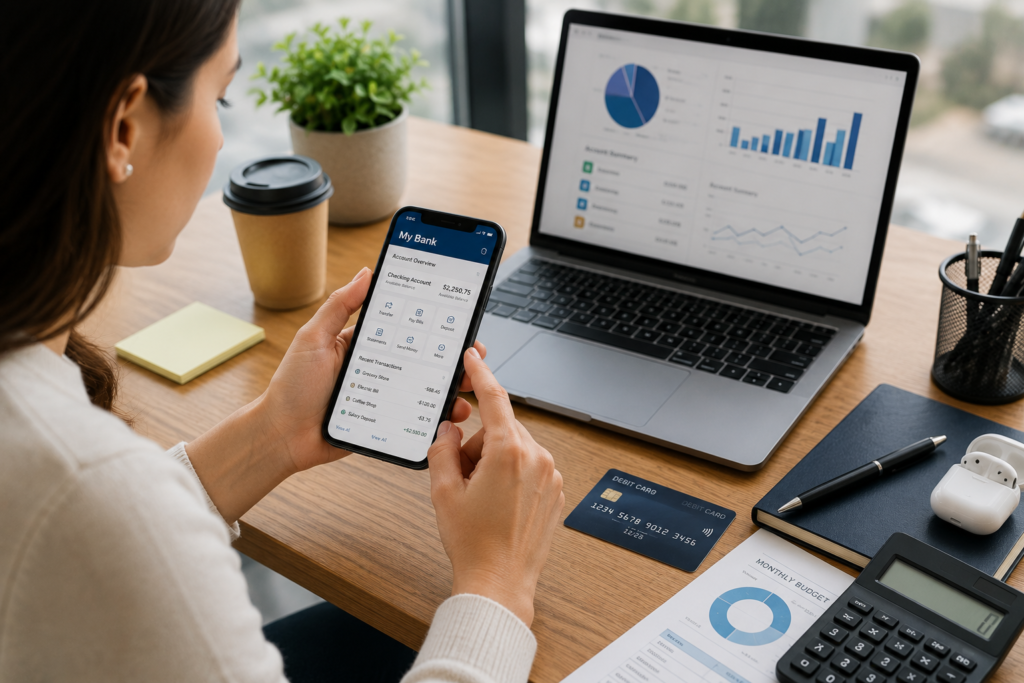
Managing your finances has never been more convenient. Thanks to digital banking, you can check your account balance, transfer money, pay bills, deposit checks, and monitor transactions from your smartphone, tablet, or computer without visiting a bank branch. As technology continues to transform the financial industry, digital banking has become the preferred way for millions…
Managing your finances has never been more convenient. Thanks to digital banking, you can check your account balance, transfer money, pay bills, deposit checks, and monitor transactions from your smartphone, tablet, or computer without visiting a bank branch.
As technology continues to transform the financial industry, digital banking has become the preferred way for millions of people to manage their money. Understanding how it works can help you take advantage of its features while keeping your accounts secure.
This guide explains what digital banking is, how it works, its benefits, potential risks, and tips for banking safely online.
What Is Digital Banking?
Digital banking refers to the delivery of banking services through electronic channels instead of relying solely on physical bank branches.
Customers can perform most everyday banking activities online using:
- Mobile banking apps
- Online banking websites
- Digital payment platforms
- ATMs
- Self-service banking kiosks
Many traditional banks now offer digital banking alongside branch services, while some banks operate entirely online.
How Does Digital Banking Work?
Digital banking connects customers to their financial accounts through secure internet-based systems.
After opening a bank account, customers typically receive access to:
- A secure online banking portal
- A mobile banking application
- Digital authentication tools
- Electronic payment services
Once logged in securely, users can manage nearly every aspect of their banking from virtually anywhere.
Common Features of Digital Banking
Most digital banking platforms provide a wide range of services, including:
- Viewing account balances
- Reviewing transaction history
- Transferring money between accounts
- Paying utility and credit card bills
- Scheduling recurring payments
- Depositing checks using a smartphone camera
- Sending money to friends and family
- Managing debit and credit cards
- Downloading account statements
- Receiving real-time account alerts
These features reduce the need to visit a physical branch.
Benefits of Digital Banking
Digital banking offers several advantages for everyday financial management.
Convenience
Access your accounts 24 hours a day from almost anywhere with an internet connection.
Faster Transactions
Many transfers and payments can be completed within minutes.
Better Money Management
Real-time notifications help you track spending and monitor account activity.
Lower Banking Costs
Online banks often have lower operating costs, which may translate into fewer fees and competitive interest rates.
Easy Bill Payments
Recurring payments help reduce the risk of missing payment due dates.
Types of Digital Banking Services
Digital banking includes many financial services beyond basic account access.
Examples include:
- Online checking accounts
- Digital savings accounts
- Mobile payments
- Electronic fund transfers
- Peer-to-peer payment services
- Online loan applications
- Credit card management
- Investment account access
Many banking platforms combine these services into one convenient mobile app.
Is Digital Banking Safe?
Digital banking is generally considered safe when banks and customers follow proper security practices.
Banks commonly use:
- Multi-factor authentication (MFA)
- Data encryption
- Biometric login (fingerprint or facial recognition)
- Fraud monitoring systems
- Secure login verification
- Automatic logout after inactivity
Customers also play an important role in protecting their accounts.
Tips for Using Digital Banking Safely
Protect your financial information by following these best practices:
- Use strong, unique passwords.
- Enable multi-factor authentication.
- Avoid logging in using public Wi-Fi.
- Keep your banking app updated.
- Review transactions regularly.
- Never share one-time verification codes.
- Log out after using shared devices.
- Watch for phishing emails and fake websites.
Practicing good digital security habits significantly reduces the risk of fraud.
Digital Banking vs Traditional Banking
Both digital and traditional banking have advantages.
Digital Banking
Pros
- Available 24/7
- Convenient mobile access
- Fast transfers
- Lower operating costs
- Easy account management
Cons
- Limited face-to-face assistance
- Requires internet access
- Technical issues may occasionally occur
Traditional Banking
Pros
- In-person customer support
- Branch services
- Cash deposits and withdrawals
- Personal financial advice
Cons
- Limited business hours
- Longer wait times
- Travel to a branch may be required
Many customers choose a bank that combines both digital convenience and branch access.
Common Mistakes to Avoid
When using digital banking, avoid these common mistakes:
- Using weak passwords
- Ignoring security alerts
- Logging in on unsecured public networks
- Not updating banking apps
- Clicking suspicious email links
- Sharing account credentials
- Failing to monitor account activity regularly
Staying alert helps protect your finances.
Who Should Use Digital Banking?
Digital banking is ideal for people who:
- Prefer managing money online
- Frequently use smartphones
- Travel often
- Want quick access to their accounts
- Pay bills electronically
- Need instant transaction notifications
It offers flexibility and convenience for everyday financial tasks.
Final Thoughts
Digital banking has transformed the way people interact with their finances by making banking faster, more convenient, and more accessible than ever before. Whether you’re paying bills, transferring funds, or checking your balance, digital banking allows you to manage your money anytime and almost anywhere.
By understanding how digital banking works and following good security practices, you can enjoy its many benefits while keeping your financial information protected.
Key Takeaways
- Digital banking allows customers to manage accounts online.
- Mobile apps and websites provide access to everyday banking services.
- Most banks offer secure features such as encryption and multi-factor authentication.
- Digital banking saves time and offers greater convenience.
- Following online security best practices helps protect your financial information.
Frequently Asked Questions
What is digital banking?
Digital banking allows customers to access and manage their bank accounts using online platforms and mobile applications instead of visiting a physical branch.
Is digital banking the same as online banking?
Online banking is a part of digital banking. Digital banking also includes mobile banking, digital payments, electronic transfers, and other technology-based financial services.
Can I open a bank account online?
Many banks allow eligible customers to open checking or savings accounts entirely online through their websites or mobile apps.
Is digital banking safe?
Yes. Most banks use encryption, fraud monitoring, and multi-factor authentication to help secure customer accounts. Users should also follow good cybersecurity practices.
What can I do with digital banking?
You can check balances, transfer funds, pay bills, deposit checks, manage cards, receive account alerts, and monitor transactions from your computer or smartphone.
Comments
Share a useful question, experience or perspective. Keep the discussion respectful and relevant to the article.