

Last Updated: June 2026 Introduction Creating a monthly budget is one of the most effective ways to take control of your finances. Whether you’re saving for a major purchase, paying off debt, building an emergency fund, or simply trying to manage everyday expenses, a budget can help you make informed financial decisions. Many people assume…
Last Updated: June 2026
Introduction
Creating a monthly budget is one of the most effective ways to take control of your finances. Whether you’re saving for a major purchase, paying off debt, building an emergency fund, or simply trying to manage everyday expenses, a budget can help you make informed financial decisions.
Many people assume budgeting is restrictive, but a good budget is actually a planning tool. It helps you understand where your money is going and ensures that your spending aligns with your financial goals. By creating a realistic monthly budget, you can reduce financial stress and improve your long-term financial stability.
In this guide, we’ll explain how to create a monthly budget step by step and provide practical tips to help you stay on track.
Why Is a Monthly Budget Important?
A monthly budget helps you:
- Track income and expenses
- Avoid overspending
- Build savings
- Reduce debt
- Prepare for unexpected expenses
- Achieve financial goals
- Improve financial confidence
Without a budget, it can be difficult to know exactly where your money is going each month.
Step 1: Calculate Your Monthly Income
The first step is to determine how much money you receive each month.
Common sources of income include:
- Salary or wages
- Freelance income
- Business income
- Rental income
- Investment income
- Side hustle earnings
Use your after-tax income when creating a budget. This provides a more accurate picture of the money available for spending and saving.
Example
Monthly salary: $4,000
Freelance income: $500
Total monthly income: $4,500
Step 2: List Your Monthly Expenses
Review your bank statements, credit card statements, and receipts to identify all monthly expenses.
Fixed Expenses
These expenses usually remain the same each month:
- Rent or mortgage
- Insurance premiums
- Loan payments
- Internet services
- Subscription services
Variable Expenses
These expenses can change from month to month:
- Groceries
- Dining out
- Transportation
- Entertainment
- Shopping
- Utilities
Tracking both fixed and variable expenses helps create a complete financial picture.
Step 3: Categorize Your Spending
Organize expenses into categories.
Examples include:
Housing
- Rent
- Mortgage
- Property taxes
Transportation
- Fuel
- Public transportation
- Vehicle maintenance
Food
- Groceries
- Restaurants
- Coffee purchases
Healthcare
- Insurance
- Prescriptions
- Medical appointments
Savings
- Emergency fund
- Retirement savings
- Investment contributions
Creating categories helps identify spending patterns and opportunities to save money.
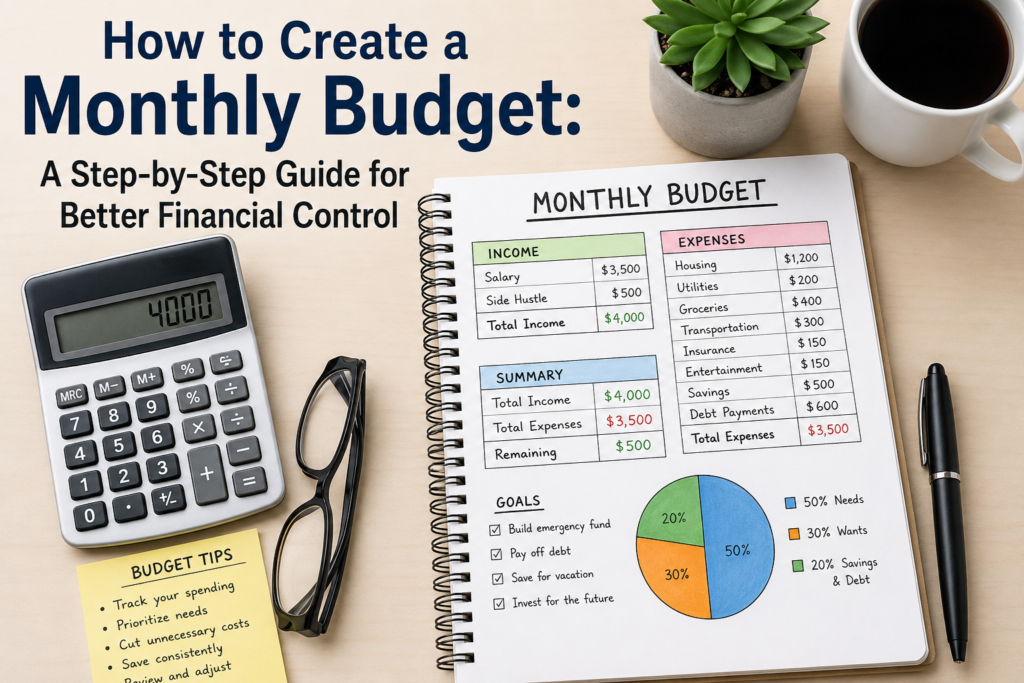
Step 4: Apply the 50/30/20 Rule
Many people find the 50/30/20 budgeting rule useful.
50% Needs
Essential expenses such as:
- Housing
- Utilities
- Food
- Transportation
- Insurance
30% Wants
Non-essential spending such as:
- Entertainment
- Dining out
- Hobbies
- Vacations
20% Savings and Debt Repayment
Financial goals including:
- Emergency fund
- Retirement savings
- Extra debt payments
This framework provides a balanced approach to budgeting.
Step 5: Set Financial Goals
A budget works best when connected to specific goals.
Examples:
Short-Term Goals
- Build a $1,000 emergency fund
- Pay off a credit card
- Save for a vacation
Long-Term Goals
- Buy a home
- Build retirement savings
- Create investment accounts
Clearly defined goals help maintain motivation and improve financial discipline.
Step 6: Monitor Your Spending
A budget is not a one-time activity.
Review spending regularly using:
- Budgeting apps
- Bank statements
- Spreadsheets
- Personal finance software
Tracking spending helps identify areas where adjustments may be needed.
Step 7: Adjust Your Budget as Needed
Life circumstances change.
You may experience:
- Income increases
- Job changes
- Unexpected expenses
- Family changes
Review your budget monthly and make adjustments when necessary.
A flexible budget is often more sustainable than a rigid one.
Common Budgeting Mistakes
Avoid these common mistakes:
Underestimating Expenses
Small purchases can add up quickly.
Ignoring Emergency Savings
Unexpected expenses can disrupt financial plans.
Setting Unrealistic Goals
Aggressive budgets may be difficult to maintain.
Not Reviewing the Budget
Regular reviews help keep your finances on track.
Practical Budgeting Tips
- Automate savings contributions
- Track spending weekly
- Reduce unnecessary subscriptions
- Use shopping lists
- Compare service providers regularly
- Maintain an emergency fund
Small changes can create significant financial improvements over time.
Frequently Asked Questions
How often should I review my budget?
Most financial experts recommend reviewing your budget at least once per month.
What is the easiest budgeting method?
The 50/30/20 rule is often considered one of the simplest budgeting frameworks for beginners.
Can budgeting help reduce debt?
Yes. A budget can identify spending areas where money can be redirected toward debt repayment.
Should I budget even if I have a high income?
Yes. Budgeting helps individuals at all income levels manage expenses, save money, and achieve financial goals.
What should I do if my expenses exceed my income?
Review discretionary spending, reduce unnecessary expenses, and explore opportunities to increase income where possible.
Conclusion
Creating a monthly budget is one of the most important steps toward financial stability. By understanding your income, tracking expenses, setting realistic goals, and regularly reviewing your finances, you can make more informed decisions and build a stronger financial future.
Remember that budgeting is not about restricting your spending. It’s about making intentional choices that support your financial goals and long-term well-being.
Sources
- Consumer Financial Protection Bureau (CFPB)
- Federal Trade Commission (FTC)
- Financial literacy resources from government agencies
- Publicly available personal finance educational materials
About the Author
Elizabeth Toohey
Elizabeth Toohey is a personal finance researcher and content writer specializing in budgeting, savings strategies, consumer banking, and financial literacy. She focuses on creating educational content that helps readers better understand everyday money management, financial planning, and responsible borrowing practices.
Comments
Share a useful question, experience or perspective. Keep the discussion respectful and relevant to the article.