

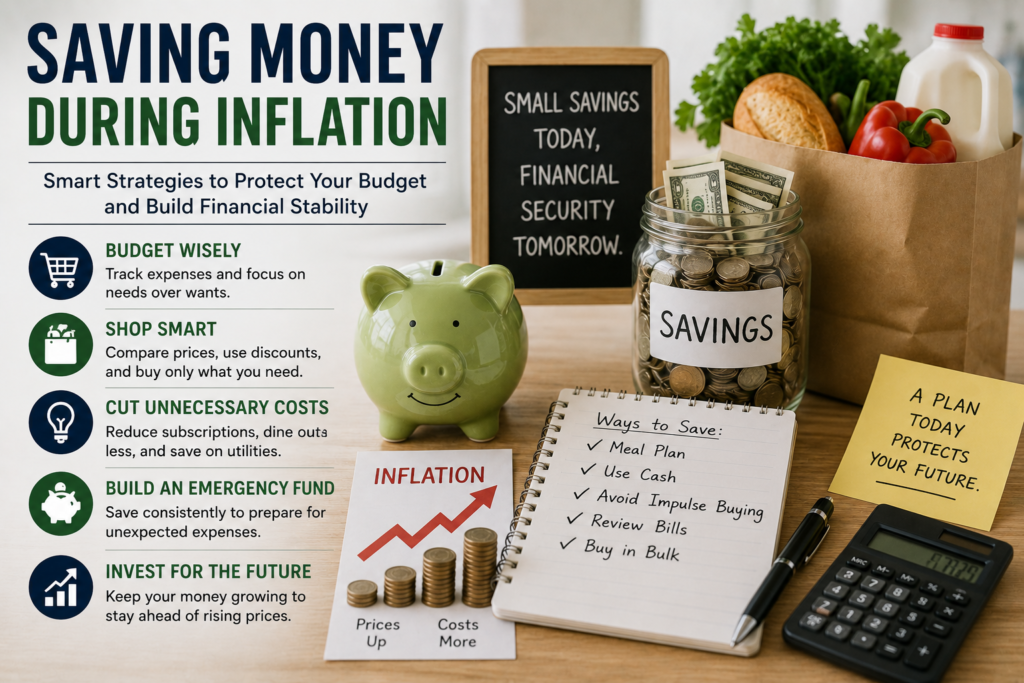
Introduction Inflation affects nearly every aspect of daily life. From grocery bills and fuel costs to housing expenses and utility payments, rising prices can place significant pressure on household budgets. While inflation is a normal part of economic cycles, periods of higher inflation often make it more difficult for families to maintain their standard of…
Introduction
Inflation affects nearly every aspect of daily life. From grocery bills and fuel costs to housing expenses and utility payments, rising prices can place significant pressure on household budgets. While inflation is a normal part of economic cycles, periods of higher inflation often make it more difficult for families to maintain their standard of living and achieve financial goals.
The good news is that there are practical ways to adapt. By adjusting spending habits, improving budgeting practices, and focusing on long-term financial planning, individuals and families can reduce the impact of inflation on their finances.
This guide explains how inflation works, why it affects household budgets, and strategies that can help you save money and strengthen your financial position during periods of rising prices.
What Is Inflation?
Inflation refers to the gradual increase in the prices of goods and services over time.
When inflation rises:
- Groceries become more expensive
- Fuel prices may increase
- Housing costs can rise
- Utility bills may become higher
- Everyday purchases cost more
As prices increase, the purchasing power of money decreases. In simple terms, the same amount of money buys fewer goods and services than before.
How Inflation Impacts Household Finances
Inflation affects both short-term spending and long-term financial planning.
Common impacts include:
Higher Living Expenses
Families may spend more on necessities such as food, transportation, and housing.
Reduced Purchasing Power
Savings may lose value over time if inflation outpaces interest earned.
Increased Financial Pressure
Households may need to adjust budgets to accommodate rising costs.
Greater Importance of Financial Planning
Careful money management becomes increasingly valuable during inflationary periods.
Step 1: Review and Update Your Budget
The first step is understanding how inflation affects your current spending.
Review categories such as:
- Groceries
- Utilities
- Transportation
- Insurance
- Housing
- Healthcare
Compare current expenses with previous months to identify areas experiencing the largest increases.
A budget review helps ensure spending remains aligned with financial priorities.
Step 2: Focus on Essential Spending
During periods of inflation, prioritizing necessities becomes especially important.
Examples of essential expenses:
- Housing
- Food
- Utilities
- Transportation
- Healthcare
- Insurance
Non-essential spending may require adjustment if costs rise significantly.
The goal is to protect financial stability while maintaining a reasonable lifestyle.
Step 3: Reduce Unnecessary Expenses
Even small spending reductions can help offset higher prices.
Areas to review include:
Subscription Services
Cancel subscriptions that are rarely used.
Dining Out
Preparing meals at home can reduce food expenses.
Impulse Purchases
Create shopping lists and avoid unplanned spending.
Entertainment Costs
Explore lower-cost recreational activities.
Reducing discretionary spending creates more room in the budget for essential expenses and savings.
Step 4: Shop More Strategically
Smart shopping habits can help reduce the impact of rising prices.
Compare Prices
Check multiple retailers before making purchases.
Buy Generic Brands
Store brands often provide similar quality at lower prices.
Use Discounts and Coupons
Promotional offers may help reduce household expenses.
Purchase in Bulk When Appropriate
Buying frequently used items in larger quantities may lower costs over time.
However, only purchase bulk items that will actually be used.
Step 5: Build and Maintain an Emergency Fund
Inflation can increase financial uncertainty.
Unexpected expenses may become even more costly during periods of rising prices.
An emergency fund helps cover:
- Medical expenses
- Vehicle repairs
- Home repairs
- Temporary income loss
Many financial experts recommend maintaining three to six months of essential living expenses in emergency savings.
Step 6: Reduce High-Interest Debt
Debt becomes more difficult to manage when living expenses increase.
Prioritize reducing:
- Credit card balances
- High-interest personal loans
- Other costly forms of debt
Lower debt obligations improve cash flow and increase financial flexibility.
Step 7: Improve Energy Efficiency
Utility bills often rise during inflationary periods.
Simple energy-saving habits may help reduce costs.
Examples include:
- Using LED lighting
- Adjusting thermostat settings
- Turning off unused electronics
- Improving home insulation
- Conserving water
Small changes can contribute to long-term savings.
Step 8: Plan Meals and Grocery Shopping
Food expenses are often one of the most noticeable areas affected by inflation.
Helpful strategies include:
Meal Planning
Plan meals before shopping.
Shopping Lists
Purchase only necessary items.
Reduce Food Waste
Use ingredients efficiently and store food properly.
Compare Unit Prices
Evaluate value rather than focusing solely on package size.
Thoughtful grocery planning can significantly reduce monthly expenses.
Step 9: Continue Saving for Long-Term Goals
It may be tempting to pause savings during inflation, but maintaining long-term financial goals remains important.
Continue contributing to:
- Emergency funds
- Retirement accounts
- Education savings
- Investment accounts
Even small contributions can help maintain financial momentum.
Step 10: Increase Financial Awareness
Financial conditions change over time.
Regularly review:
- Household expenses
- Savings progress
- Debt balances
- Financial goals
Staying informed helps households make proactive financial decisions rather than reactive ones.
Common Mistakes During Inflation
Ignoring Budget Changes
Outdated budgets may not reflect current costs.
Using Credit Cards Excessively
Relying heavily on debt can create long-term financial challenges.
Stopping All Savings
Maintaining some level of savings remains important.
Making Impulse Purchases
Emotional spending can become more costly during inflation.
Failing to Track Expenses
Monitoring spending helps identify opportunities for savings.
Practical Ways Families Can Save Money During Inflation
- Cook more meals at home
- Reduce subscription expenses
- Compare insurance policies
- Shop with a list
- Use energy-efficient appliances
- Avoid unnecessary debt
- Build emergency savings
- Review monthly expenses regularly
Small actions often produce meaningful results when practiced consistently.
Frequently Asked Questions
Why does inflation make it harder to save money?
As prices rise, a larger portion of income may be needed for everyday expenses, leaving less available for savings.
Should I stop investing during inflation?
Financial decisions depend on individual circumstances. Long-term financial goals often remain important regardless of short-term economic conditions.
How can families reduce grocery costs during inflation?
Meal planning, shopping lists, comparing prices, and reducing food waste may help lower grocery expenses.
Is an emergency fund important during inflation?
Yes. Emergency savings provide financial protection against unexpected expenses and economic uncertainty.
How often should I review my budget during inflation?
Monthly budget reviews can help households adjust spending as costs change.
Conclusion
Inflation can create financial challenges, but it does not have to derail your financial goals. By updating your budget, reducing unnecessary expenses, shopping strategically, maintaining savings habits, and focusing on long-term financial planning, you can adapt to rising prices more effectively.
The key is consistency. Small financial improvements made over time can help protect your budget, strengthen your financial security, and improve your ability to navigate changing economic conditions.
With careful planning and informed decision-making, families can continue making progress toward their financial goals even during periods of inflation.
Sources
- Consumer Financial Protection Bureau (CFPB)
- Federal Trade Commission (FTC)
- FDIC Consumer Resources
- U.S. Bureau of Labor Statistics (BLS)
- Public financial literacy resources
About the Author
Elizabeth Toohey
Elizabeth Toohey is a personal finance researcher and content writer specializing in budgeting, savings strategies, consumer banking, and financial literacy. She focuses on creating educational content that helps readers better understand everyday money management, financial planning, and responsible borrowing practices.
Comments
Share a useful question, experience or perspective. Keep the discussion respectful and relevant to the article.